In the public imagination, a dentist’s expertise is often confined to the four walls of a clinic, a world of routine checkups and the occasional tooth extraction. They are seen as the ‘tooth mechanic’, an individual whose expertise begins and ends within the thirty-two units of the human dentition. This reductionist view suggests that the dental profession is a quiet, elective world of white coats, scheduled fillings, and the occasional lecture on interdental brushing.
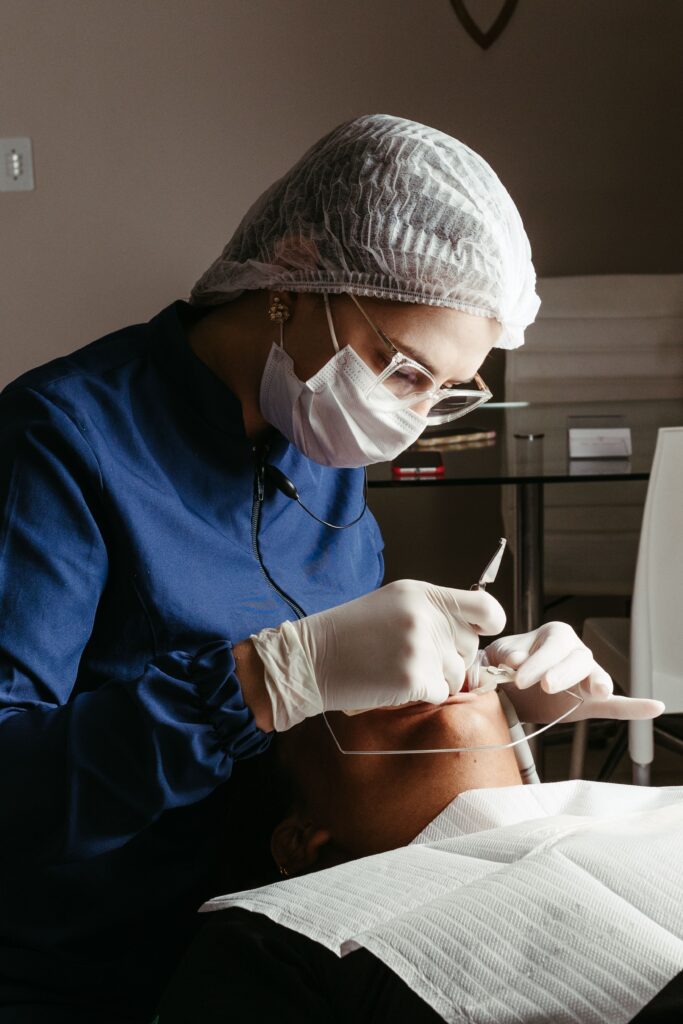
However, as someone who has climbed the ranks from a junior dental officer to the surgical suite, I find this perception not only patronizing but obviously inaccurate. The reality of modern dentistry, specifically the field of Oral and Maxillofacial Surgery (OMFS), is a vast and rigorous surgical discipline. It is the bridge between medicine and dentistry, a specialty that claims the entire head and neck as its canvas. We are the architects of the facial skeleton and the guardians of the upper airway.
The recent discourse circulating on social media (on Threads), where a ‘colleague’ disparaged a dental officer for having ‘only four on-call cases’ compared to twenty medical referrals, is a symptom of a much deeper problem, a profound lack of interprofessional literacy. Having stood in those very shoes as an on-call officer eons ago, I know that the “20 vs. 4” comparison is a fallacy that ignores the physical and technical reality of our work.
To understand why this comparison fails, we must look at the nature of clinical labour. In the viral Threads discussion, the metric of ‘busyness’ was defined solely by the quantity of folders on a desk. From a purely numerical standpoint, twenty is larger than four. However, in the realm of specialized surgery, the number of patients seen is often inversely proportional to the complexity of the intervention required.
In many medical wards, a referral may be managed through diagnostic reasoning, the ordering of blood tests, or the adjustment of a pharmaceutical regimen. These are vital tasks requiring immense cognitive training, but they are often consultations that can be concluded within a certain period of time.
In contrast, an on-call shift for a Dental Officer or an OMFS registrar is inherently procedure-dominant. When the ‘call’ goes off at 2:00 AM, it is rarely for a ‘chat’. It is for a physical, manual, and surgical intervention. If a dental officer has four cases in a night, they are not ‘seeing’ four patients; they are operating on four patients. In our field, a single case can, and often does, take three to four hours of meticulous labour under intense surgical lights.
Let us break down what those ‘four cases’ may actually look like in a typical night for an on-call dental officer team. These are the procedures that the public, and often our medical peers, rarely see behind the closed doors of the emergency treatment room.
The Mandibular and Dentoalveolar Fracture
When a patient arrives after a motor vehicle accident or a physical assault with a broken jaw, the treatment is not as simple as applying a plaster cast. Because the jaw is dynamic, moving thousands of times a day for speech and mastication, it requires rigid or semi-rigid stabilization. This often involves the placement of arch bars or eyelet wiring. For the uninitiated, this is a grueling process of individually wiring stainless steel bars to the patient’s teeth, then using wires to lock the upper and lower jaws together. This procedure must be done with extreme precision to ensure the patient’s bite (occlusion) returns to its original state. A discrepancy of even one millimetre can lead to permanent functional disability and chronic pain. This procedure alone, performed on a distressed patient in an emergency setting, can take hours of intense work.
Complex Soft Tissue Reconstruction
The face is the most vascularized and aesthetically sensitive part of the human body. When a dental surgeon is called for the suturing of lacerations, they are not just closing a wound. They are performing a reconstruction.
Lacerations involving the lips, cheeks, and facial areas require a layered approach. We must identify and approximate muscle layers to ensure the patient retains the ability to smile or pucker their lips. We use sutures thinner than a human hair to minimize scarring, knowing that the patient’s self-esteem and social identity depend on the result.
Deep Space Infections
Perhaps the most critical cases involve the management of spreading odontogenic infections. A simple toothache can, within hours, track into the submandibular or parapharyngeal spaces. This leads to conditions like Ludwig’s angina, where the floor of the mouth swells so severely that it pushes the tongue upward and backward, completely obstructing the airway.
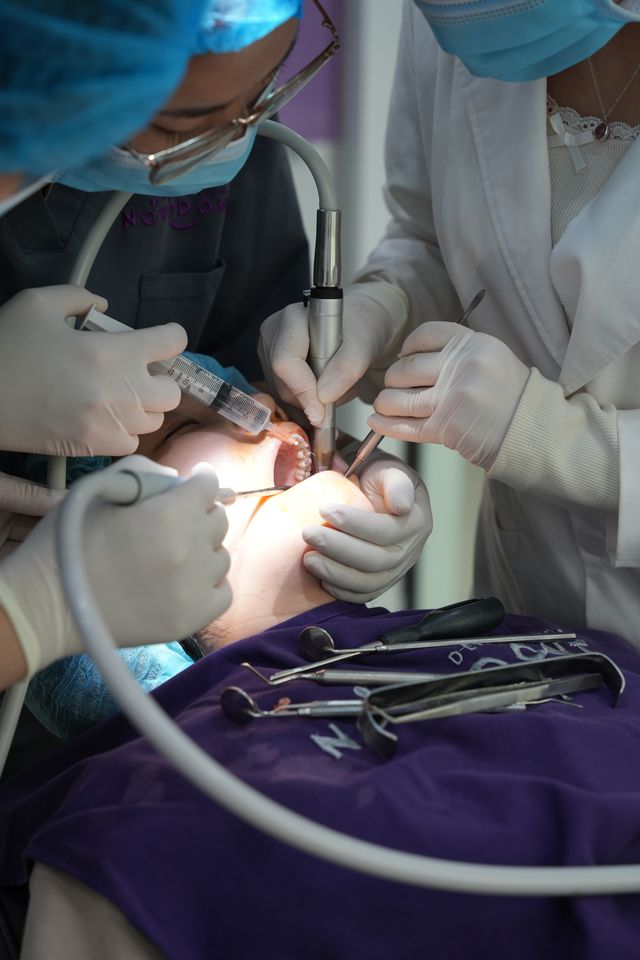
When a dental officer manages such a case, they are in a race against time. They must perform an incision and drainage (I&D), navigating the vital structures of the neck to release the pus and pressure. This is high-stakes surgery where the margin for error is zero.
We must also address the fatigue that accompanies procedure-based work. In the middle of wiring a jaw or suturing a severed lip, the surgeon is locked in. There is a physical toll to standing in a hunched position for several hours, peering through surgical loupes, maintaining a steady hand despite the adrenaline and the exhaustion.
The healthcare system is a collaborative ecosystem, not a competition. Professional maturity is the ability to recognize that every specialty has its own heavy lifting. To belittle a colleague’s workload based on a misunderstanding of their scope of practice is a failure of professional character. It creates an environment of resentment among young dental officers who already feel undervalued by the system.
Respect is not a finite resource. By affording it to our colleagues in the maxillofacial field, we strengthen the entire fabric of the healthcare system. The mouth is part of the body, and the surgeon who tends to it is an indispensable part of the medical team.