

Walk into any pharmacy, supermarket, or traditional pharmacy in Malaysia, and you would see shelves lined with bottles containing bright colors that guarantee you more energy, a stronger immune system, improved blood circulation, or simply a boost in vitality. Such drinks have become a popular product that is infused in Malaysian culture. Consumers have become enticed into using the product in the belief that they would be opting for the healthier choice.
However, what hides behind all the reassuring names and classic assertions is a lesser-known issue: hidden sugar.
When “Healthy” Doesn’t Mean Sugar-Free
Functional foods can be described as food or beverages that have advantageous attributes for human health beyond basic nutritional requirements. Examples of functional food in Malaysian society include traditional tonic drinks that can be made from herbs, for example, Ginseng, Tongkat Ali, Kacip Fatimah, Bird’s Nest, or Herbal Combitions. They can be branded or packaged and sold in the form of capsules, tablets, or drinks. They are valued for being natural and safe for consumption (Mohd Effendy et al., 2012).
However, it is important to note that the formulation of these beverages in order to be palatable is not given prominence (Tee et al., 2017). Most traditional tonics tend to have bitter or strong herbal flavors. To make these desirable for drinking by consumers, companies tend to add lots of sugar, glucose syrup, honey, or maltodextrin.
“The final analysis? A drink that could include health-benefiting herbs, but with sugar concentrations similar to, and at times even higher, than soft drinks.”
The Sugar You Don’t See (or Expect)
The biggest issue pertaining to traditional tonic drinks regards consumer perception. Unlike carbonated drinks, these beverages tend not to be considered ‘sugary’. The use of terms such as ‘herbal’, ‘traditional’, ‘functional’, or a ‘health supplement’ has a health halo, underestimating sugar consumption according to Hawkes (2004).
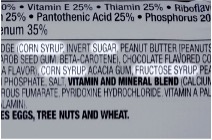
In other cases, one bottle of the tonic beverage may consist of as much sugar as 6–10 teaspoons of sugar in one serving. Taking it as the prescribed everyday dose may go beyond the limit advised by the World Health Organization for the consumption of free sugars.
This is even more problematic because the sugar level is typically:
- In small print
- Defined as: under less common names (such as glucose syrup, fructose, maltodextrin}
- Is not clearly emphasized or highlighted on the front label
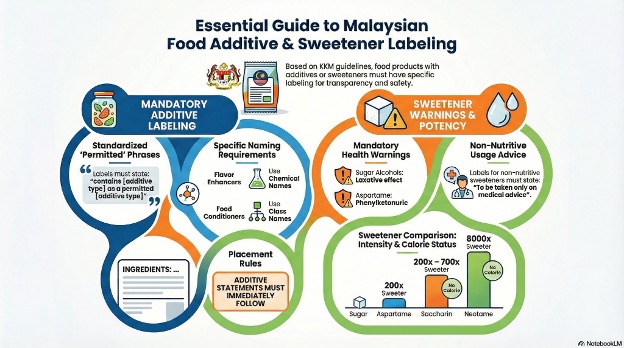
For the average consumer, much less the older or chronically ill consumer, this information flies past the radar. Thus, if an ingredient is first on the list, it means the product contains more of that ingredient compared to the others. Reading the ingredient list or seeing some infographic about it can help consumers avoid unwanted substances, such as additives, preservatives, or allergens.
Cultural aspects
Conventional tonics have a unique place among the people of Malaysia. Many people from the younger generation have seen their elders taking such beverages as tonics while suffering from illnesses, after childbirth, and when feeling weak. Community perceptions of traditional medicine reflect varying levels of understanding, yet demonstrate strong cultural embeddedness, particularly within Malay society (Yusof et al., 2025). This deep-rooted cultural trust helps explain why conventional tonics continue to be widely accepted and relied upon by the community.
In today’s world, this trust factor has been reinforced by sophisticated marketing techniques, which include modern packaging, celebrity endorsements, and ‘scientifically formulated’. The sugar content, however, is less likely to be an element of these stories.
Thus, this mix of cultural beliefs and aggressive marketing could be quite deceptive, especially when consumers believe that “traditional” always means “healthy”.
The Silent Risk for Chronic Diseases
According to the Institute for Public Health, (2019), Malaysia is already facing a mounting burden of NCDs such as diabetes, obesity, and cardiovascular disease, to which excess sugar intake is a major contributor.
Ironically, the fact that many people consume traditional tonic drinks for health improvement, energy boosting, or even fatigue management only results in skyrocketing their sugar consumption levels. Most at risk are:
- People with diabetes or pre-diabetes
- Adults older than previously studied
- Weight-watchers
- Children and adolescents consuming “health” drinks that were being marketed to families
In clinical practice, dietitians often find patients who claim not to drink sweet beverages but state that they drink tonic or herbal drinks every day.
Are the Functional Ingredients Worth It?
With that in mind, the following question arises: Do the functional ingredients in the product outweigh the sugar content?
Although some herbs have been shown to have possible benefits, their data may be limited or conflicting, especially when taken in small quantities as part of a sweet beverage supplement. In addition, the possible benefit might be countered by the metabolic damage associated with high sugar intake if taken on a regular basis (Te Morenga et al., 2013).
In short, an ingredient for promoting good health fails to negate the harmful consequences of consuming high levels of sugar.
Consumer Actions
Everyone, as consumers, should not need to steer clear of traditional tonics altogether, but they must be more discerning. This can be accomplished by:
- Reading the nutrition information panel carefully
- Comparing nutrient content between brand, refer per 100g or 100ml
- Caution regarding daily recommended consumptions
- Choosing lower sugar or unsweetened varieties when available
- Considering tonic drinks as occasional supplements, and not everyday drinks
Your health should never be sacrificed for the price of hidden sugar overload.
Conclusion (Getting Real About “Healthy” Drinks)
Traditional tonics are an entrenched part of Malaysian culture, and they are not about to suddenly disappear. The time has come to move past the health implications and take a closer look at what’s in the bottle.
When it comes to achieving even better health, Malaysians should have products that are functionally functional, not only functionally functional, named as such, but also functionally functional in reality. Filtering out the presence of hidden sugar is the very first step towards making more informed decisions (Roberfroid et al., 2002).
In fact, health benefits should never be disguised with sugar-coated rhetoric.
This article is written by Siti Hajar Binti Nor Hamizi and Yee Rou Qian (Final Year Dietetic Students, Faculty of Health Sciences, Universiti Kebangsaan Malaysia) and was supervised by Prof. Dr. Zahara Binti Abdul Manaf (Dietetic Lecturer, Researcher and Dietitian, Dietetic Programme, Faculty of Health Sciences, Universiti Kebangsaan Malaysia).
References:
- Hawkes, C. (2004). Nutrition labels and health claims: The global regulatory environment. World Health Organization.
- Institute for Public Health (IPH). (2019). National Health and Morbidity Survey (NHMS) 2019: Non-Communicable Diseases. Ministry of Health Malaysia.
- Mohd Effendy, N., Mohamed, N., Muhammad, N., Mohamad, I.N., & Shuid, A.N. (2012). Eurycoma longifolia: Medicinal plant in the prevention and treatment of male osteoporosis due to androgen deficiency. Evidence-Based Complementary and Alternative Medicine, 2012, 1–9.
- Malik, V.S., Popkin, B.M., Bray, G.A., Després, J.P., Hu, F.B. (2010). Sugar-sweetened beverages and risk of metabolic syndrome and type 2 diabetes. Diabetes Care, 33(11), 2477–2483.
- Institute for Public Health (IPH). (2019). National Health and Morbidity Survey (NHMS) 2019: Non-Communicable Diseases. Ministry of Health Malaysia.
- Mohd Effendy, N., Mohamed, N., Muhammad, N., Mohamad, I.N., & Shuid, A.N. (2012). Eurycoma longifolia: Medicinal plant in the prevention and treatment of male osteoporosis due to androgen deficiency. Evidence-Based Complementary and Alternative Medicine, 2012, 1–9.
- Roberfroid, M.B. (2002). Functional food concept and its application to prebiotics. Digestive and Liver Disease, 34(S2): S105–S110.
- Yusoff, A. N. M. (2025). Community attitudes and awareness toward herbal use in Malaysia. International Journal of Wellness, Counselling and Prevention Studies. — traditional herbal use rooted in culture.
- Te Morenga, L., Mallard, S., & Mann, J. (2013). Dietary sugars and body weight: Systematic review and meta-analyses of randomised controlled trials and cohort studies. BMJ, 346, e7492.
- Tee, E.S., Nurliyana, A.R., & Aminah, A. (2017). Sugar intake and dietary sources among Malaysian adults. Malaysian Journal of Nutrition, 23(1), 1–12.