Over the last few weeks, there have been calls for the authorities to take stronger action as the haze worsens. Some have even called for a state of emergency to be declared.
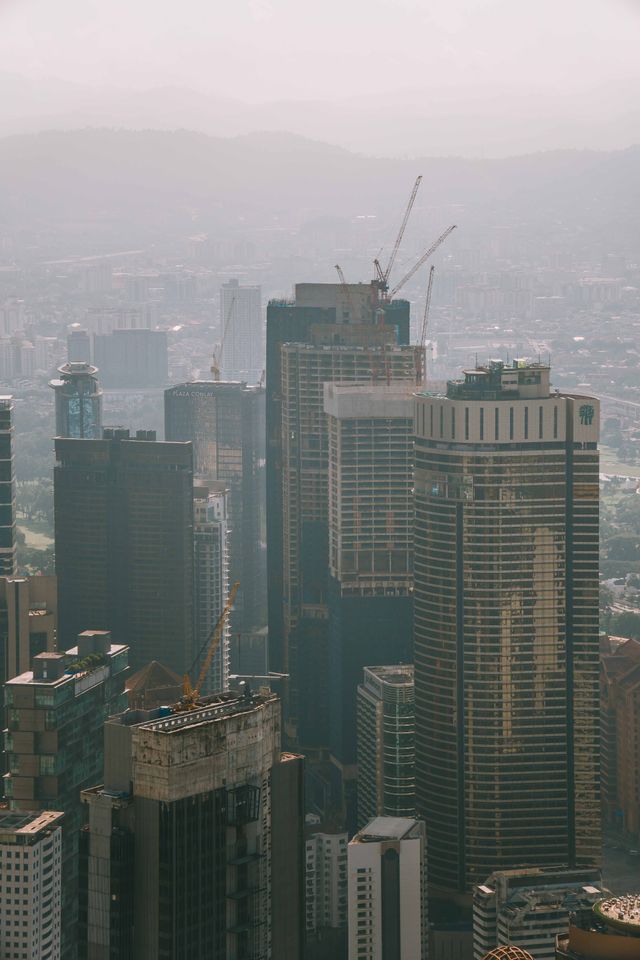
This brings us back to what Sarawak experienced in 1997, when air pollution reached dangerously high levels. A haze emergency was declared after the Air Pollutant Index exceeded 500.
But amid the current haze, there also seems to be some confusion on social media about the numbers used to describe our air quality.
The Department of Environment uses the Air Pollutant Index (API), or Indeks Pencemaran Udara (IPU). At the same time, people are sharing readings from various apps and websites using the Air Quality Index (AQI).
Sometimes the difference is striking.
The official API may show 150 or 200, while an AQI app at around the same time may show 300 or even 400.
Naturally, the higher number creates a greater sense of urgency.
People begin to ask: Why is the official reading so much lower? Is the air actually worse than what we are being told? And if the AQI is already extremely high, why are the authorities not taking stronger action?
This apparent mismatch can create distrust. Some may even question whether the API is still an appropriate tool for monitoring the haze.
But before drawing that conclusion, we need to understand what these numbers actually mean.
First, what exactly is our API?
Malaysia’s API is not based on one pollutant alone. It is calculated from six major air pollutants.
| Pollutant | Averaging period used for API |
| PM2.5 | 24 hours |
| PM10 | 24 hours |
| Sulphur dioxide (SO₂) | 1 hour |
| Nitrogen dioxide (NO₂) | 1 hour |
| Carbon monoxide (CO) | 8 hours |
| Ozone (O₃) | 1 hour / 8 hours |
Each pollutant produces its own sub-index. The highest sub-index becomes the API reported for that monitoring station.
So if the API is 180, it does not mean that all six pollutants are at 180. It means that one of them has produced the highest sub-index of 180.
During haze, the main pollutant is commonly PM2.5.
PM2.5 simply means very fine particles in the air measuring 2.5 micrometres or smaller. They are so small that they can travel deep into our lungs, and some may enter the bloodstream.
This is why we pay particular attention to PM2.5 during haze.
There is another important point.
Malaysia’s API as a whole is not simply based on a 24-hour average. Different pollutants use different averaging periods.
But during haze, when PM2.5 or PM10 becomes the dominant pollutant, the 24-hour averaging period becomes particularly important.
And this brings us to the confusion over AQI.
Then why does my AQI show a different number?
Here is where things become confusing. There is no single universal AQI.
Different countries use different systems to convert the amount of pollution in the air into an index. Commercial apps may also use different systems.
Think of temperature. A temperature of 30°C and 86°F looks like two completely different numbers. But they describe the same temperature using different scales.
API and AQI are not exactly like Celsius and Fahrenheit, but the example illustrates an important point: two different numbers do not automatically mean that one of them is wrong.
Different air-quality systems may use different formulas and cut-off points to decide when air becomes “moderate”, “unhealthy” or “very unhealthy”.
So even when two systems are looking at the same PM2.5 concentration, they may produce different index numbers.
There is also an important distinction between PM2.5 concentration and an air-quality index.
PM2.5 concentration tells us how much of these fine particles are in the air, usually expressed in micrograms per cubic metre (µg/m³). An API or AQI takes that concentration and converts it into an index according to its own rules.
But this is still only part of the explanation.
There is another major difference — time.
The last 24 hours versus what is happening now
For PM2.5, Malaysia’s API uses a 24-hour averaging period.

Imagine that the air was relatively good for most of the morning. Then, at 3 pm, the wind changes. Thick smoke moves into your area and PM2.5 suddenly rises.
A more current PM2.5 reading can show this deterioration quickly.
But the PM2.5 component of the official API reflects a longer averaging period. The bad air that has just arrived does not immediately erase what happened during the preceding hours.
So you may see a very high AQI or PM2.5 reading on your phone while the official API remains considerably lower.
That does not automatically mean that the official reading is wrong. The two numbers may simply be telling you different things.
The opposite can happen too.
Suppose it rains heavily in the evening and the air suddenly becomes much cleaner. A more current PM2.5 reading may fall quickly.
The official API may remain elevated for some time because the high particulate pollution from earlier still contributes to its longer averaging period.
This is why comparing two numbers directly without knowing how they were calculated can be misleading.
So which one should we use?
The answer is: both can be useful, but for different reasons.
There is no need to fight over whether API or AQI is the “correct” number.
The official API gives us a standardised picture of the broader air-pollution situation. More importantly, it is the official index used for public-health advice and government decisions.
Decisions such as closing schools, cancelling public activities or declaring a haze emergency cannot reasonably change every hour whenever pollution rises or falls.
For these decisions, there needs to be an official and standardised measure. This is where the API is important.
But as individuals, we sometimes need to answer a different question:
What is the air like right now?
Perhaps you are thinking of going for a jog.
Perhaps your children want to play outside.
Perhaps your elderly parents are about to take their evening walk.
Or perhaps you simply want to know whether you should reduce your time outdoors or wear a suitable mask before leaving the house.
For these immediate decisions, a more current PM2.5 reading or AQI, depending on the source, can provide useful additional information.
This does not mean ignoring the API.
It means understanding that the two pieces of information can serve different purposes.
Singapore already takes a similar approach. Its National Environment Agency publishes a 24-hour PSI together with a 1-hour PM2.5 reading. The longer-term index is useful for broader planning, while the 1-hour PM2.5 reading helps people make more immediate decisions about outdoor activities.
Perhaps we can think about our readings in the same way.
Use the official API to understand the broader situation and to follow official public-health advice.
Use reliable, more current PM2.5 information to help make immediate personal decisions.
And if the air appears to be deteriorating rapidly, there is nothing wrong with being cautious.
So the next time someone posts an AQI of 350 while the official API says 180, we do not immediately have to conclude that one of them must be wrong.
They may use different scales. They may use different cut-off points. They may represent different periods of exposure.
There is really no need to fight over API versus AQI.
Because ultimately, the number is not what matters most.
It is the air that we breathe.
Sources and further reading
Department of Environment Malaysia (DOE). Air Pollutant Index (API) and Determination of Air Pollution Index Calculation.
Department of Environment Malaysia (DOE). Chronology of Haze Episodes in Malaysia.
US Environmental Protection Agency (EPA). AQI Breakpoints.
Singapore National Environment Agency (NEA). Air Quality FAQs and guidance on the use of 1-hour PM2.5 concentration readings during haze.