Imagine if your body had its superhero squad, working behind the scenes 24/7 to break down harmful substances and keep you safe. Well, it does! Your cells are equipped with an amazing system called xenobiotic metabolism, which helps eliminate foreign compounds, including drugs, pollutants, and even toxins from the food you eat or the air you breathe.

How Your Body Handles Toxins
Every day, you’re exposed to substances that don’t naturally belong in your body. These are called xenobiotics, and they include substances such as medications (paracetamol, antibiotics), food additives, naturally occurring compounds in plant foods (phytochemicals), pesticides, cigarette smoke, and even air pollution. Nonetheless, many potentially beneficial effects have been demonstrated concerning phytochemicals.
Your liver is the body’s detox HQ. It has a sophisticated system made up of three phases (Figure 1):
- Phase I – Activation (Biotransformation): Enzymes (such as cytochrome P450) break down xenobiotics into smaller, often more reactive molecules. This step is necessary but can sometimes create toxic intermediates.
- Phase II – Conjugation: The body neutralizes these reactive molecules by attaching them to water-soluble substances, making them safer and easier to eliminate.
- Phase III – Excretion: Finally, the body removes the detoxified compounds through urine, bile, or sweat.

When the System Gets Overwhelmed
While your body is incredibly efficient, it has limits. If you exceed a safe dose of certain drugs or are exposed to too many toxins, your detox system can struggle, leading to harmful effects. Here’s how things can go wrong:
- Overdosing on Paracetamol (Acetaminophen) – Your liver can safely process normal doses, but too much can overwhelm the detox system, leading to liver damage or even failure. That’s why overdosing on painkillers is extremely dangerous.
- Abuse of legal or illegal drugs – Substances like alcohol, nicotine, or illicit drugs force your liver to work overtime, sometimes producing toxic byproducts that harm your cells, leading to addiction or organ damage.
- Inhaling toxic fumes – Pollution, household cleaners, or industrial chemicals can introduce harmful xenobiotics into your body faster than it can remove them, increasing the risk of respiratory problems, neurological issues, or even cancer.
The Power of Antioxidants and a Healthy Diet
Your body has a natural defense system that helps neutralize toxins, and antioxidants play a significant role in this process. Antioxidants are molecules that protect your cells from damage caused by oxidative stress, which can be triggered by excessive toxin exposure. They help prevent cell damage, reduce inflammation, and support the proper functioning of your detox system (Figure 2).
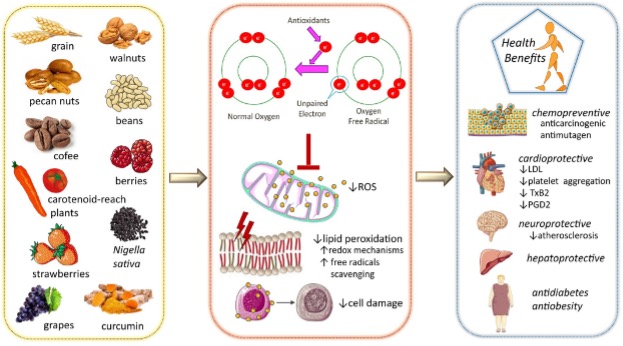
The best way to boost your antioxidant intake is by eating a diet rich in fruits and vegetables. All of the vital vitamins and minerals that our bodies require are abundant in these types of foods. These foods are positioned at the base or the first tier of the updated Malaysian Food Pyramid 2020 due to their significance. Here are some of the examples and why they are essential:
- Leafy greens (spinach, kale, broccoli) – Packed with chlorophyll and fiber, they help your liver detoxify harmful substances.
- Berries (blueberries, strawberries, raspberries) – High in vitamin C and flavonoids, they fight oxidative stress and support cellular repair.
- Citrus fruits (oranges, lemons, grapefruits) – Contain vitamin C, which enhances detoxification enzymes. Increased levels of GSH are associated with vitamin C consumption.
- Garlic and onions – Contain sulfur compounds that help the liver produce detoxifying enzymes.
- Turmeric – Rich in curcumin, known for its anti-inflammatory and liver-protective properties.
- Nuts and seeds (walnuts, flaxseeds, chia seeds) – Provide healthy fats and antioxidants that help the body flush out toxins.
- Cruciferous vegetables contain compounds (such as sulforaphane and dithiolethiones) that can increase glutathione levels.
Special naturally occurring antioxidant in the cells – GLUTATHIONE
One of the important compounds present in our cells is glutathione (GSH), which protects cells from oxidative stress and is also involved in the phase II detoxification system. GSH possesses strong antioxidant properties, is found in high concentrations intracellularly, and is ubiquitously present in various tissues. GSH levels are significantly reduced in many diseases where oxidative stress is believed to play a pathogenic role. As a result, cells become more susceptible to oxidative damage.
GSH neutralizes hydrogen peroxide (which is produced by the action of superoxide dismutase on reactive oxygen species) by forming water, a reaction catalyzed by glutathione peroxidase (GSHPx). This reaction also produces oxidised glutathione (GSSG), and glutathione reductase catalyzes the regeneration of reduced glutathione (GSH). This cycle ensures a sufficient intracellular supply of GSH so that cells are constantly protected from oxidative stress (also referred to as oxidative insult).Increased levels of oxidised glutathione have been linked to various diseases, including diabetes mellitus, cardiovascular diseases, and neurodegenerative disorders. In the phase II detoxification system, GSH plays a crucial role in converting xenobiotics into water-soluble compounds for excretion from the body.
Protecting Your Superpower
Since your detox system isn’t invincible, you can support it by:
- Following medication guidelines – Always stick to the recommended dose.
- Avoiding smoking and drug abuse – Reducing exposure to harmful xenobiotics keeps your liver from working overtime.
- Eating a healthy diet – Antioxidant-rich foods like fruits, vegetables, and whole grains help neutralize oxidative stress caused by toxins.
- Staying hydrated – Water helps flush out toxins efficiently.
- Getting enough sleep and exercise – Both are essential for cellular repair and detoxification.
Your body is designed to fight off harmful substances, but it needs your help. By making smart lifestyle choices, you can ensure that your detox system remains strong and efficient.Remember: Even superheroes have limits!
This article is wrtten by Dr Nuruliza Roslan, a cellular biologist at Universiti Sains Islam Malaysia (USIM) and Dr Faizul Helmi Addnan, a food nutritionist at USIM.
References:
Esteves, F., Rueff, J., & Kranendonk, M. (2021). The central role of cytochrome P450 in xenobiotic metabolism—a brief review on a fascinating enzyme family. Journal of xenobiotics, 11(3), 94-114.
Rahaman, M. M., Hossain, R., Herrera‐Bravo, J., Islam, M. T., Atolani, O., Adeyemi, O. S., … & Sharifi‐Rad, J. (2023). Natural antioxidants from some fruits, seeds, foods, natural products, and associated health benefits: An update. Food science & nutrition, 11(4), 1657-1670.
Jomova, K., Raptova, R., Alomar, S. Y., Alwasel, S. H., Nepovimova, E., Kuca, K., & Valko, M. (2023). Reactive oxygen species, toxicity, oxidative stress, and antioxidants: Chronic diseases and aging. Archives of toxicology, 97(10), 2499-2574.