
You were lying peacefully in bed, when you wake up- you notice your pillow has a small pool of blood. Only then you realized your nose is bleeding.
Your kid was out of your sight for a minute, you then heard him crying in the living room. His hands are covering his nose, soaked with blood.
What can you do to help?
- The first thing is: Do not panic. I know this sounds stupid, but when the time comes, we still panic. I have seen medical staff even panic with such emergency, especially if the ones involved are their loved ones.
- The aim is to stop the bleeding. Pinch the nose at the lower / soft part to close the nostril. Use your fingers first if you cannot find any handkerchief or tissue paper. Keep the pressure for at least 5 minutes. Most people will let go after a few seconds to see whether the bleeding is persistent. This will delay the formation if blood clot. Breathe from the mouth.
- Tilt the head downwards. This will prevent the blood from flowing into the mouth. Somehow, traditionally, some of us are taught to tilt the head backwards. This should not be the way.
- Prepare a bowl or small basin for the blood to drip down. Reasons for this is to prevent the blood from staining the clothes and also to quantify the amount of blood loss.
- Place an ice pack on the forehead and also suck ice cubes to promote the constriction of blood vessels.
If all measures fail after about 15 minutes or the blood loss is too much or if you are not sure what to do, please go to the emergency department. If controlled, do visit your doctor or ENT specialist for further work up.
I demonstrate again how the similar process, but this is done in a hospital setting. First, prepare all the materials needed. Here, we prepare yellow plastic bag in a small container to collect the blood, ice pack in the plastic bag and ice cubes in the cup to be sucked.
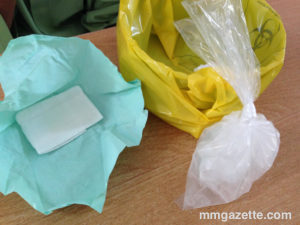
Image 1: Gauze, yellow plastic bag in a container and ice cubes for pressure on forehead
Then, instruct the patient on what is about to be done. Usually, the patient pinches the nose and collect the blood. The staff will aid with the ice pack on the forehead.
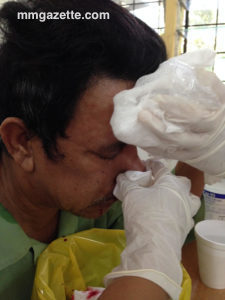
Image 2: Nose compression with the finger, ice pack on the forehead and a cup with ice cubes to suck on.
If the bleeding is severe and not able to be stopped, we will pack the nose. Various materials can be used. Ribbon gauze, sponge material and small inflatable balloons are available. Here, we demonstrate the special sponge type. This will expand on contact with fluid or blood and gives sufficient pressure and aid with the clot formation.
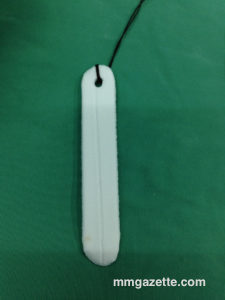
Image 3: The sponge material used to pack the nose. The end with the string will be left outside to facilitate pulling it off later in next few days.
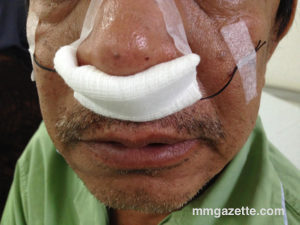
Image 4: The sponge material is already placed in the nostril. You can see the string is left on the outside. A small bolster gauze is left outside to absorb the blood and fluid from the nose.
As mentioned, please follow the steps given. Do seek medical attention if this is the first time happening. Although most of the time, there is nothing sinister, we would not want to miss any potential early life threatening diseases such as cancer (https://www.mmgazette.com/nasopharyngeal-carcinoma-east-malaysian-perspective-dr-ahmad-nordin/)
Hope you all will be more confident the next time this happens to you or your loved ones.
(Acknowledgement: I once again would like to thank the patients, parents & staff for allowing their pictures to be published for public health education)
Dr Ahmad Nordin is an ENT surgeon currently working in Sabah. Learn more about him at The Team page.
[This article belongs to The Malaysian Medical Gazette. Any republication (online or offline) without written permission from The Malaysian Medical Gazette is prohibited.]
References:
- Essential ENT Practice First Edition
- Rogan J Corbridge
12 comments for ““Help! My Nose Is Bleeding!”- Dr Ahmad Nordin”