
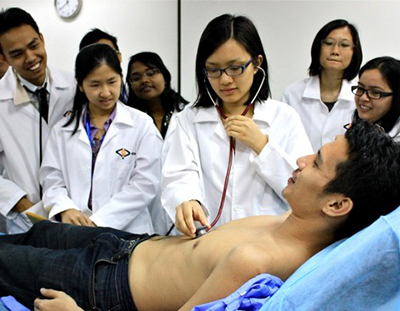
Source: perdanauniversity.edu.my
Has it ever crossed your mind, how sometimes you find things easier or more difficult to learn and understand compared to your peers?
Do you ever wonder why some topics that are so easy for your friends to tackle turn into a struggle for you or vice versa?
Do you notice that you and your roommate have different opinions on whether or not to have music playing in the background while you’re studying?
The reason behind these differences may be due to differences in learning styles.
To put it simply, your learning style is the way you tend to learn best. It involves your method of choice when absorbing, organizing, and interpreting information. Learning styles do not define a person, they do not tell us about a person’s intellectual capabilities, but they can help us understand the way our minds work.
There are many benefits of figuring out and trying to understand your learning style as some people learn most effectively when the methods used are closely interrelated with their preferred learning style. Sometimes we can improve our learning by exploiting our strengths and further developing them. It is also very important to pinpoint weaknesses in order to improve ourselves and turn the weaknesses into strengths and advantages.
People who are visual learners find pictures and graphs very interesting sources of information while auditory learners find it helpful if they hear the input or listen to music while learning. Kinaesthetic learners on the other hand prefer a more hands-on approach and love it more when they get the opportunity to experience and experiment. Some people need all these factors to learn, as for me, I love watching videos and animations to help make me understand things better.
In different situations and learning environments, different learning strategies may need to come into play, so it is best to have a few tricks up your sleeves and use them to your advantage.
“It is not our differences that divide us. It is our inability to recognize, accept, and celebrate those differences.”
– Audre Lorde
To be honest, I never actually knew my learning style and used to just hit the books in hopes that I would be able to retain the information long enough for me to pour it all out during the exams. Unfortunately, this method only helped me pass the exams instead of really learning and remembering the information and knowledge.
Recently, I had the privilege of being posted to Hospital Angkatan Tentera, Terendak, Melaka. Prior to this posting, I never really knew the exact way of studying anything, let alone methods of studying in clinical years. It is not the same as during the earlier years of medical school. Now, time is of greater importance and is to be used wisely. It is difficult to revise all the previous knowledge gained during pre-clinical years now as you’re so caught up in the hospital and the cases till you can’t even find the time to properly revise. Fortunately, I was blessed enough to be honoured by the presence of an amazing honorary lecturer who goes by the name of Lt. Kol. Dr. Mohamed Ali Zakaria (an Internal Medicine specialist in Terendak) among other helpful lecturers who were very kind to share their wisdom with us. Dr. Ali did not just tell us how to do things, he showed us. He practiced what he preached and was always optimistic, especially during times when we thought it was impossible. He shared some tips with us and I feel that everyone deserves to benefit from our experiences. Quoting Santosh Kalwar, “It does not matter where you go and what you study, what matters most is what you share with yourself and the world.”
Discipline
First and foremost, being posted in a military hospital definitely helped my peers and I improve our attitudes as we became more disciplined. We had more respect for time and were usually an hour early to the hospital. This gives us time to catch up on the progress of the patients and we can have a heads up before the attending doctor does his or her ward rounds. Dr. Ali guided us and always told us to take an interest in the patient’s well-being instead of treating them as though they were test subjects. We were taught to learn from the patients and then to go back and revise on the related topics for the day instead of trying to digest the whole Kumar and Clark Clinical Medicine book in one night (not that any of us were planning to anyway). The patients are your textbooks , they can teach you a lot if you are willing to invest the time, energy and passion to learn.
Plan Ahead
We also found having a target or to do list to be very helpful in making sure we actually achieved something every day instead of just loitering around the hospital waiting for new patients to come. When you have a specific plan for the day, for instance, to do 5 Cardiovascular examinations and 3 Respiratory physical examinations on patients throughout the day, you would work towards achieving the target instead of going around blindly and just doing an examination or two when you feel like it. Instead of trying to be a jack of all trades, I believe that simplicity and consistency is the key towards developing and improving oneself.
Buddy System
STUDY IN GROUPS!! You may not be able to cover all topics alone, therefore, you should try to divide and conquer your lessons. Discuss and debate with your peers. You may be surprised to find out that different people comprehend the same information differently. It is important to have your peers with you in order to keep an eye on each other’s progress and well-being. Besides, your life is not all about the books. You need to enhance the spiritual aspects of life too. Get up, go for a run, a swim, a jog, a game of badminton and just let loose with friends once a while. Everyone deserves a good pick me up from time to time.
These are just a few tips my friends and I have picked up along the way in our current journey through our first year in clinical training. I am very grateful to the amazing educators who never cease to amaze us with their knowledge, kindness and willingness to guide us.
“The best teachers are those that can influence even the poorest of all learners.”
– Kim Panti
4 comments for “Studying In Clinical Years – Nurul Firdaus Binti Salahul Ahmed”